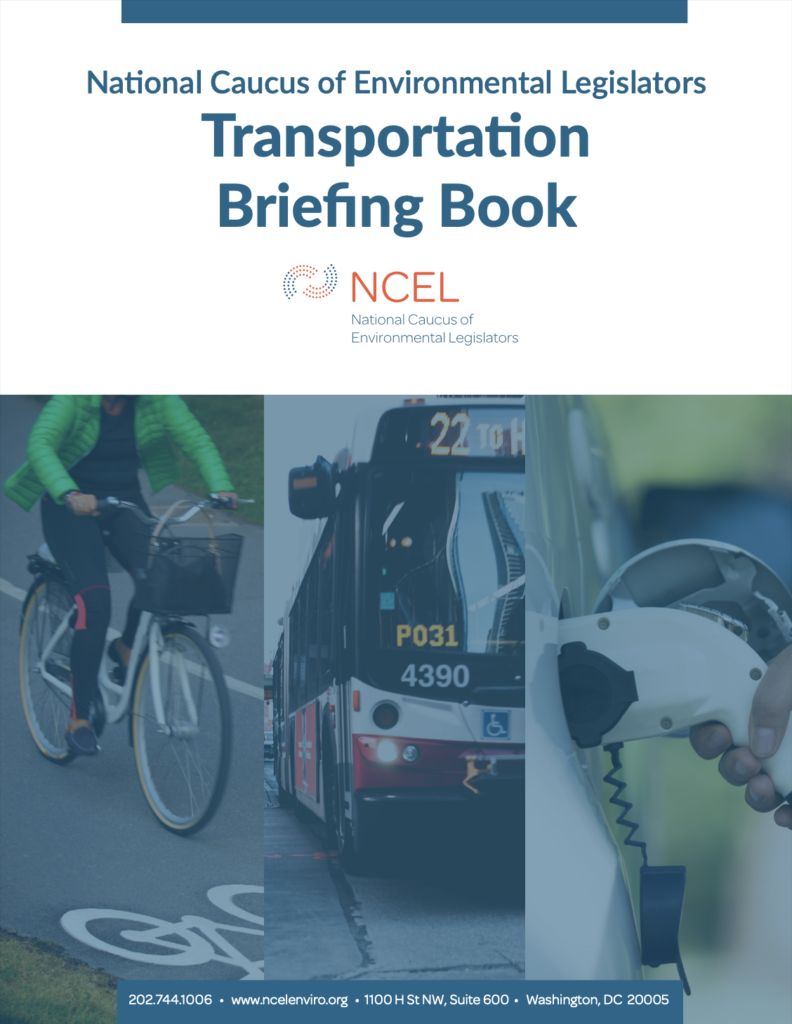
Transportation Briefing Book


ResourceTransportation
Download Resource

Point of Contact
Introduction
Transportation sector emissions are produced by light-, medium-, and heavy-duty vehicles, aircrafts, rail, and ships or boats. Tackling transportation emissions is critical to solving the climate crisis. In 2021, the transportation sector was the largest contributor to anthropogenic emissions in the United States, at 29 percent of the total. However, reducing emissions is not the only benefit from overhauling our current transportation system. Switching to cleaner and more varied forms of transportation increases quality of life in communities, decreases public health impacts from pollution, decreases motor vehicle injuries and fatalities, increases active lifestyles, increases mobility equity, and advances environmental justice. To achieve these benefits, it is critical that states employ transportation modes that center people in spaces, particularly people of color, rather than single-occupancy vehicles.
Transportation electrification is critical for decarbonization. States are working to make electric vehicles more affordable, charging stations more accessible, and public fleets less emissions-intensive. Moving away from internal combustion engines will improve air quality as well as reduce carbon emissions.
While electric vehicles are a key part of the solution to reducing transportation emissions, they are not the golden ticket to an improved transportation system. Single-occupant vehicles are not the most efficient form of transport, and reliance on cars requires significant infrastructure costs and resource extraction for car parts and batteries. Prioritizing active transportation and public transit are instrumental to creating thriving communities that work for everyone.
This briefing book breaks down several transportation policies being considered in states across the country. Each section includes a description of the policy, key facts and figures, and several examples of legislation passed or introduced on the state level. Sections include: electric vehicles, the Transportation and Climate Initiative, low carbon fuel standards, medium- and heavy-duty vehicle electrification, active transportation, public transportation, transit-oriented development, and congestion pricing.
In order to reduce greenhouse gas emissions at the rate necessary to prevent the worst effects of the climate crisis, these policies need to work in tandem to transition our transportation system to a low-carbon one.

2026 Legislator Briefing Book


NEC 2025 – 2029 Strategic Plan


2023 Annual Report
Public Transportation - NCEL
NCEL's webpage on public transportation with relevant information and policy options.
Electric Vehicles - NCEL
NCEL's webpage on electric vehicles with relevant information and policy options.
Roadmap for Electric Transportation - RAP
The Regulatory Assistance Project has a roadmap for electrifying transportation with legislative and policy guides.
Driving Down Emissions - Smart Growth America
This report explores how our land-use and transportation decisions are inextricably connected, and unpacks five strategies that can make a significant dent in the growth of emissions while building a more just and equitable society.
Reports - Transit Oriented Development Institute
The Transit Oriented Development Institute has a library of reports on low-carbon transportation strategies and success stories.
Subscribe to the National Environmental Caucus Newsletter
Stay up to date on upcoming events, opportunities to expand your network, and the latest environmental policy trends from across the U.S.