Active Transportation
Increasing access and prioritizing the development of any self-propelled, human-powered mode of transportation, such as walking or bicycling, reduces a household’s reliance on single-occupancy vehicles and fossil-fuel-dependent vehicles.
Overview
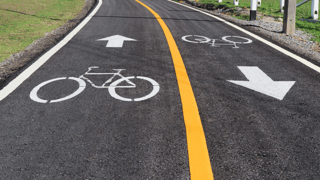
Active transportation is any self-propelled, human-powered mode of transportation, such as walking or bicycling. Increasing access and prioritizing the development of active transportation reduces a household’s reliance on single-occupancy vehicles and fossil-fuel-dependent vehicles. It also has implications for public health, including reduced cardiovascular risk and increased air quality.
Strategies to expand and improve forms of active transportation include:
- Encouraging Safe Routes to School programs to enable children to walk and bike to school safely.
- Constructing a connected network of multi-use trails.
- Accommodating all roadway users with comprehensive street design measures such as “complete streets,” including sidewalks, bicycle lanes, and share-the-road signs that provide safe and convenient travel for all users of the roadway.
- Separating motor-vehicle traffic from non-motorized traffic with physical barriers, such as the construction of bicycle boulevards.
- Providing safe and convenient bicycle and pedestrian connections to public parks and recreation areas.
- Encouraging bicycle parking at workplaces and transit stops.
- Encouraging the development of street-level shopping and restaurants along pedestrian and bicycle routes.


Key Facts
Choosing a bike over a car just once a day reduces an average citizen’s carbon emissions from transport by 67%. (Bloomberg)
Active commuting that incorporates cycling and walking is associated with an 11% reduction in cardiovascular risk. (APHA)
A 5% increase in neighborhood walkability was associated with: 6.5% fewer vehicle miles traveled per capita, 5.6% fewer grams of nitrogen dioxide emitted per capita, and 5.5% fewer grams of volatile organic compound emitted per capita. (Safe Route Partnership)
Current Legislation
- No matches.
- No matches.
Filters: 0
| SB1423: Regional planning: standardized spatial planning datasets.View Source | California | CA Sen. Henry Stern (D-CA-027) | Transportation, Land, Energy | Active Transportation, Outdoor Engagement | Outdoors for Health | Passed Original Chamber |
| AB2168: Active Transportation Program: guidelines.View Source | California | CA Assemb. Buffy Wicks (D-CA-014) | Climate, Transportation, Land, Energy | Active Transportation, Just Transition, Outdoor Engagement, Public Transportation | Low-income Access, Outdoors for Health | Passed Original Chamber |
| SB3484: Veh Cd-Plates-RegistrationView Source | Illinois | IL Sen. Ram Villivalam (D-IL-008), IL Rep. Barbara Hernandez (D-IL-050), IL Rep. Kevin Olickal (D-IL-016) | Transportation | Active Transportation | E-bikes | Sent to Executive |
| S.B.3029: RELATING TO COMMUNITY DEVELOPMENT.View Source | Hawaii | HI Sen. Chris Lee (D-HI-025) | Transportation, Land, Energy | Active Transportation, Outdoor Engagement | Complete Streets, Outdoors for Health | Effective |
| SB3478: Idot-Bicycle Grid NetworkView Source | Illinois | IL Sen. Mike Simmons (D-IL-007) | Transportation, Land, Energy | Active Transportation, Outdoor Engagement | Pedestrian Safety, Outdoor Recreation and Trails, Bike Lanes | Introduced or Prefiled |
| HB8298: An Act Relating To Capital Development -- 2026 Bond Referenda (2026 Bond Referenda For Capital Development.)View Source | Rhode Island | RI Rep. Kathleen "Kathy" Fogarty (D-RI-035), RI Rep. Lauren Carson (D-RI-075), RI Rep. Teresa Tanzi (D-RI-034), RI Rep. Susan Donovan (D-RI-069), RI Rep. Jason Knight (D-RI-067), RI Rep. Rebecca Kislak (D-RI-004), RI Rep. Terri "Terri-Denise" Cortvriend (D-RI-072), RI Rep. June Speakman (D-RI-068), RI Rep. Brandon Potter (D-RI-016), RI Rep. Jennifer Boylan (D-RI-066) | Transportation | Active Transportation | Pedestrian Safety, Bike Lanes | Introduced or Prefiled |
| SB2272: Eminent Domain - As introduced, adds to the definition of "public use" for eminent domain a sidewalk, public greenway, bicycle lane, pedestrian way, or proper slope development associated with a road, highway, bridge, or other structure, facility, or project used for public transportation. - Amends TCA Section 29-17-102. Conference Committee ReportsView Source | Tennessee | TN Sen. Richard Briggs (R-TN-007) | Transportation | Active Transportation | Complete Streets | Introduced or Prefiled |
| SB 6352: Concerning transportation resources.View Source | Washington | WA Sen. Marko Liias (D-WA-021) | Transportation, Energy | Active Transportation, Transmission, Utilities and the Grid | Pedestrian Safety, Utility Scale Siting and Permitting, Bike Lanes | Introduced or Prefiled |
| HB2161: Eminent Domain - As introduced, adds to the definition of "public use" for eminent domain a sidewalk, public greenway, bicycle lane, pedestrian way, or proper slope development associated with a road, highway, bridge, or other structure, facility, or project used for public transportation. - Amends TCA Section 29-17-102. Conference Committee ReportsView Source | Tennessee | TN Rep. Dave Wright (R-TN-019) | Transportation | Active Transportation | Complete Streets | Introduced or Prefiled |
| HB0863: An act relating to transportation initiatives to improve equity and infrastructure, increase resiliency, and reduce emissionsView Source | Vermont | VT Rep. Mollie Burke (D-VT-097), VT Rep. Phil Pouech (D-VT-021), VT Rep. Kate Lalley (D-VT-023), VT Rep. Chloe Tomlinson (P-VT-038), VT Rep. Candice White (D-VT-083) | Transportation | Active Transportation, Electric Vehicles, Public Transportation | Transit Funding, Multi-Family Housing Charging, Vehicle Miles Traveled Targets | Introduced or Prefiled |
| S.B.2989: RELATING TO TRANSPORTATION.View Source | Hawaii | HI Sen. Chris Lee (D-HI-025) | Transportation | Active Transportation | E-bikes | Introduced or Prefiled |
| HB0834: An act relating to traffic calming measures for village centers and pedestrian and bicycle safetyView Source | Vermont | VT Rep. Kate Lalley (D-VT-023) | Transportation | Active Transportation | Pedestrian Safety, E-bikes | Introduced or Prefiled |
| S.9055: Relates to electric scooter programs and establishing the street and sidewalk infrastructure fundView Source | New York | NY Sen. Leroy Comrie (D-NY-014) | Transportation | Active Transportation | Pedestrian Safety | Introduced or Prefiled |
| H.B. 762: Transportation funding; consideration of sidewalks for certain project prioritization.View Source | Virginia | VA Del. Holly Seibold (D-VA-012) | Transportation | Active Transportation | Pedestrian Safety | Introduced or Prefiled |
| SB487: West Virginia Trails, Access, and Stewardship ActView Source | West Virginia | WV Sen. Jack Woodrum (R-WV-010) | Transportation | Active Transportation | Introduced or Prefiled | |
| A.1595: Provides gross income tax credits to taxpayers who purchase certain low-speed electric bicycles.View Source | New Jersey | NJ Assemb. Sean Kean (R-NJ-030) | Transportation | Active Transportation | E-bikes | Introduced or Prefiled |
| A.3925: Directs BPU to establish rebate program for purchase of electric bicycles.View Source | New Jersey | NJ Assemb. James "Jim" Kennedy (D-NJ-022), NJ Assemb. Robert "Rob" Karabinchak (D-NJ-018), NJ Assemb. William "Bill" Moen (D-NJ-005) | Transportation | Active Transportation | E-bikes | Introduced or Prefiled |
No matching bills.
Stay Updated on This Issue
Subscribe to stay updated on policy developments that deal with this issue, and/or others.
Related Resources

Active Transportation Issue Brief
Active transportation is any self-propelled, human-powered mode of transportation, such as walking or bicycling. Increasing access and prioritizing development of active transportation like walking and cycling reduces a household's reliance on single-occupancy vehicles and fossil-fuel dependent vehicles. Choosing a bike over a car just once a day reduces an average individual’s carbon emissions from transport by 67 percent. Increasing modes of active transportation also has implications for public health. Active commuting that incorporates cycling and walking is associated with an 11 percent reduction in cardiovascular risk. Communities of color are less likely to have access to safe biking and walking infrastructure, despite being dependent on forms of active transportation for essential travel at higher rates than their white counterparts. For example, Chicago’s white neighborhoods have 50 percent more bike lanes than Black neighborhoods. Creating new bike lanes, walking paths, and other active transportation infrastructure in communities of color is critical to advancing environmental justice.

Transportation Briefing Book
This briefing book breaks down several transportation policies being considered in states across the country. Each section includes a description of the policy, key facts and figures, and several examples of legislation passed or introduced on the state level. Sections include: active transportation, congestion pricing, electric vehicles, low carbon fuel standards, medium- and heavy-duty vehicle electrification, public transportation, transit-oriented development, the Transportation Climate Initiative, and vehicle miles traveled.
Online Resources
The purpose of this handbook is to help state departments of transportation (DOTs) develop or update state pedestrian and bicycle plans.
Safe Routes Partnership releases biannual report cards to track each state’s progress in supporting communities where people can easily be physically active.
Smart Growth America has a resource on the components and benefits of Complete Streets policies nationwide.
The San Diego Association of Governments has a Mobility Solutions Toolkit to understand mobility and environmental justice.
The Transportation Research and Education Center has a live E-Bike Incentive Programs table to track e-bike purchase incentive programs in the United States and Canada.

Active Transportation and Environmental Justice
Designing towns and cities to include more active transportation infrastructure, especially in environmental justice areas, plays a key role in improving public health, climate action, and community wellbeing.
Improving Health
Active commuting that incorporates cycling and walking is associated with an 11% reduction in cardiovascular disease — the leading cause of death in the United States. (People for Bikes)
Inequitable Access
Communities of color are less likely to have access to safe biking and walking infrastructure, such as protected bike lanes and sidewalks, despite being dependent on forms of active transportation for essential travel at higher rates. (Urban Institute)
Economic Health
Active transportation systems can help to improve the economic health of underserved areas by creating more connected communities that foster small business development, increased property values, and free and safe transportation options. (North Central Texas Council of Governments)
What Members Say
“There was an NEC workshop on sustainable transportation and a legislator from Colorado talked about e-bike rebates. I thought that was a fantastic idea. So in our 2023 big transportation bill that was passed, we included e-bike rebates…It was so popular when the vouchers were offered on the internet, the computer system crashed and there was a little bit of a delay because so many people wanted to get these rebates.”

Representative Frank Hornstein
Minnesota
“I credit the resources from NEC for assisting me in keeping transportation emissions reductions at the top of my priority list, and this year that support has helped lead to a successful effort to reduce transportation emissions in Rhode Island.”

Senator Alana DiMario
Rhode Island
News & Events
2026 Energy Affordability Leaders Summit
Join NEC in Philadelphia, Pennsylvania, from December 6-9 for a convening of energy affordability leaders.
2026 MRLC Forum Recap
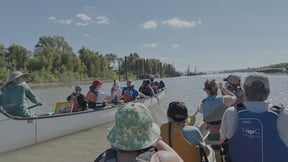
State legislators from across seven states convened in Jackson, Mississippi, for the 2026 Mississippi River Legislative Caucus (MRLC) Forum, where they explored how to support one of the most economically and socially consequential waterways.


Legislators from 43 States and Territories Oppose USDA’s Effort to Rescind the “Roadless Rule”
A bipartisan group of 232 state legislators from 43 states and territories submitted a formal comment letter to the U.S. Department of Agriculture (USDA) opposing the proposed rescission of the Roadless Area Conservation Rule (the “Roadless Rule”).
Subscribe to the National Environmental Caucus Newsletter
Stay up to date on upcoming events, opportunities to expand your network, and the latest environmental policy trends from across the U.S.