Soil Health Issue Brief
ResourceLand, Water
Download Resource
Point of Contact
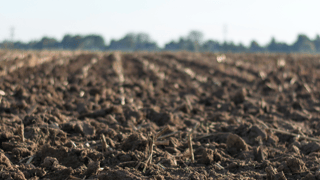
- Increases Farm Profitability: Healthy soils can increase farm profits, reduce money spent on fertilizers, and require less water.
- Reduces Flood Risk and Improves Drought Resilience: Healthy soils contribute to flood and drought resilience by higher water infiltration rates and increased water holding capacity, collecting excess flood water more quickly than degraded land, and withstanding the shocks of drought, which reduce erosion.
- Improves water quality: pollution can be broken down into harmless substances by certain micro-organisms present in the soil and become trapped in the soil.
- Recharges groundwater: precipitation falls on the land surface, infiltrates into soils, and moves through pore spaces down to the water, creating a cleaner, healthier Mississippi River.
- Improved water infiltration into soil and increased plant cover reduces downstream peak water flow: opportunities for upstream and downstream collaborations.
State Soil Health Programs
States can play a key role in supporting soil health initiatives for farmers by providing funding, technical assistance, education, and other resources. Below are some examples of existing state soil health programs:
- Maryland: The Maryland Healthy Soils Program provides financial support to farmers to improve soil health, carbon storage, and farm profitability. Established via Maryland HB1063 in 2017.
- Minnesota: The Minnesota Office for Soil Health provides technical assistance and research to farmers on soil health. The Minnesota Soil Health Financial Assistance Grant Program, established in 2023 by HF 1316, provides cost-sharing for the purchase and retrofit of soil health equipment.
- Wisconsin: The Wisconsin Soil and Water Resource Management Program now requires the state’s Department of Agriculture, Trade, and Consumer Protection to support soil health through grants, resources, and events for farmers.
Legislation
Legislation is an effective tool to increase state funding for soil health, as well as technical assistance and resources for agricultural producers. Below are a few examples:
- Colorado HB24-1249 (Enacted 2024): Established a state income tax credit for agricultural stewardship practices, including practices that increase soil health.
- Illinois SB 1701 (Enacted 2023): Created the Illinois Healthy Soils Initiative to improve soil and water quality, agricultural productivity, and ecosystem resilience through voluntary and incentive-based soil health efforts.
- Oregon HB 2998 (Introduced 2023): Would create the Oregon Soil Health Initiative to provide technical assistance, education, outreach, and support to agricultural producers to promote soil health.


Quarterly Impact Report


Soil Health | National Caucus of Environmental Legislators (NCEL)
NCEL's issue page on soil health, including state legislation to promote good soil health.
Soil Health Resources | U.S. Department of Agriculture (USDA)
USDA's list of resources on soil health.
Soil Health Toolkit | American Farmland Trust
American Farmland Trust's toolkit with foundational principles of best soil health practices.
Economics of Soil Health Systems in Midwest Corn and Soy | Soil Health Institute
Soil Health Institute's webpage on corn and soy production in the American Midwest.
Subscribe to the National Environmental Caucus Newsletter
Stay up to date on upcoming events, opportunities to expand your network, and the latest environmental policy trends from across the U.S.