Nature-Based Solutions
Working with nature to manage natural ecosystems, working lands, and the built environment can help to address societal challenges, improve biodiversity, and support human health and well-being.

Overview
Nature-based solutions involve working with nature to address societal challenges, improve biodiversity, and support human health and well-being. These solutions help protect, restore, or manage coastal ecosystems and working lands, while integrating nature into the built environment. Healthy ecosystems, such as forests, soil, and seagrass, naturally sequester excess carbon in the atmosphere and produce important co-benefits, such as improved water quality or nursery habitats. Urban forests reduce urban heat island effects and provide recreational space for local communities. Coral reefs, mangrove forests, and cobble berms help protect coastlines from extreme weather events, flooding, and sea-level rise.
Policy pathways can promote the use of nature-based solutions — as opposed to typical “grey”, industrial infrastructure — to preserve natural ecosystems, combat climate change, and protect communities. States can employ a suite of policy options to advance nature-based solutions, including: (1) adding nature-based solutions to a state’s climate policy or portfolio, (2) conserving coastal and working lands to sequester carbon, (3) employing smart forest management policies, and (4) streamlining permitting processes for nature-based environmental restoration projects.


Key Facts
Land sinks — such as forests and grasslands — currently sequester 26% of emissions. Conservation and improved land management can enhance this natural sequestration capacity.
Oceans have absorbed at least 90% of the excess heat generated by recent climate changes and have absorbed up to 20-30% of human-generated carbon dioxide since the 1980s.
Deforestation, wetlands destruction, and soil degradation increase greenhouse gas emissions, but there are ways to reverse these trends and enhance natural ecosystem health to sequester carbon.
Current Legislation
- No matches.
- No matches.
Filters: 0
| HB 2251: Concerning climate commitment act accounts.View Source | Washington | WA Rep. Joe Fitzgibbon (D-WA-034) | Climate, Oceans | Climate Accountability, Just Transition, Nature Based Solutions | Blue Carbon, Low-income Access, Cap and Invest | Effective |
| SB9: AN ACT TO AMEND TITLE 7 OF THE DELAWARE CODE RELATING TO THE PROTECTION OF WETLANDS.View Source | Delaware | DE Sen. Stephanie Hansen (D-DE-010) | Wildlife, Oceans, Water | Biodiversity, Flood Resilience, Nature Based Solutions, Sustainable Agriculture & Water | Eelgass, Seagrass, Ocean Biodiversity Protection | Effective |
| L.D. 2063 (S.P. 851): An Act to Clarify Activities Allowed Under the Natural Resources Protection ActView Source | Maine | ME Sen. Denise Tepler (D-ME-024) | Oceans | Coastal Resilience, Nature Based Solutions | Coastal Resilience | Effective |
| A.5346: Authorizes payment of relocation costs under Blue Acres program.View Source | New Jersey | NJ Assemb. Shama Haider (D-NJ-037) | Oceans | Coastal Resilience, Nature Based Solutions | Introduced or Prefiled | |
| A.10936: Relates to the definition of tidal wetlandsView Source | New York | NY Assemb. Deborah Glick (D-NY-066) | Oceans | Coastal Resilience, Nature Based Solutions | Passed Second Chamber | |
| R.C.S.0068: Para ordenar el Departamento de Recursos Naturales y Ambientales la actualización de reglamentos, establecer y promulgar protocolos y normativas de similar naturaleza, relacionados con la erosión costera y riberas de otros cuerpos de agua en consideración con los cambios en la zona costera de Puerto Rico por motivos de los recientes huracanes, terremotos y otros eventos naturales; y para otros fines relacionados.View Source | Puerto Rico | PR Sen. Marissa "Marissita Jimenez" Jimenez Santoni (PNP-PR-008) | Oceans | Coastal Resilience, Nature Based Solutions | Blue Carbon, Coastal Resilience | Passed Original Chamber |
| AB2373: The California Coastal Act: local coastal program: sea level rise plan: neighborhood-scale adaptation approach.View Source | California | CA Assemb. Diane Dixon (R-CA-072) | Oceans | Coastal Resilience, Nature Based Solutions | Introduced or Prefiled | |
| S.4041: Increases amounts of aid paid to certain municipalities that host watershed lands; increases amount annually appropriated to "Highlands Protection Fund" from realty transfer fee revenues.View Source | New Jersey | NJ Sen. Joseph "Joe" Pennacchio (R-NJ-026), NJ Sen. Anthony "Tony" Bucco (R-NJ-025) | Oceans | Nature Based Solutions, Offshore Wind | Blue Carbon, Offshore Wind | Introduced or Prefiled |
| CS/CS/SB 302: Coastal ResiliencyView Source | Florida | FL Sen. Ileana Garcia (R-FL-036) | Climate, Oceans | Climate Adaptation , Coastal Resilience, Nature Based Solutions | Effective | |
| HB7991: An Act Relating To Waters And Navigation -- Coastal Resilience -- Nature-Based Solutions For Erosion Control, Water Resource Management, And Expedited Permitting (Provides That Dem Regulations And Crmc In Consultation With The Chief Resilience Officer Shall Update To Prioritize Nature Based Solutions For Coastal Resilience Projects That Would Be Coordinated By Dem Using An Expedited Permitting Process.)View Source | Rhode Island | RI Rep. Lauren Carson (D-RI-075), RI Rep. Arthur "Art" Handy (D-RI-018), RI Rep. David Bennett (D-RI-020), RI Rep. Terri "Terri-Denise" Cortvriend (D-RI-072), RI Rep. June Speakman (D-RI-068), RI Rep. Jennifer Boylan (D-RI-066), RI Rep. Tina Spears (D-RI-036) | Oceans | Coastal Resilience, Nature Based Solutions | Introduced or Prefiled | |
| HR1747: House Study Committee on Restoring Georgia's Salt-Water Ecosystems; createView Source | Georgia | GA Rep. Rick Townsend (R-GA-179) | Oceans | Nature Based Solutions | Salt Marshes | Introduced or Prefiled |
| HB38: State waters; Alabama Seagrass Restoration Task Force established to remediate seagrass loss within state marine watersView Source | Alabama | AL Rep. Chip Brown (R-AL-105) | Oceans | Nature Based Solutions | Eelgass, Seagrass | Enacted |
| S.5392: Permits certain not-for-profit corporations engaged in engineering for certain conservation efforts to do business or provide professional engineering, land surveying or professional geology services in the stateView Source | New York | NY Sen. Jessica Scarcella-Spanton (D-NY-023) | Oceans | Coastal Resilience, Nature Based Solutions | Coastal Wetlands | Passed Original Chamber |
| CS/HB 1035: Nature-Based Coastal ResiliencyView Source | Florida | FL Rep. James "Jim" Mooney (R-FL-120) | Oceans | Coastal Resilience, Nature Based Solutions | Eelgass, Seagrass, Blue Carbon, Coastal Resilience | Out of Committee |
| SB124: State waters; Alabama Seagrass Restoration Task Force established to remediate seagrass lossView Source | Alabama | AL Sen. David Sessions (R-AL-035) | Oceans | Nature Based Solutions | Eelgass, Seagrass | Out of Committee |
| S.B.2186: RELATING TO BLUE CARBON.View Source | Hawaii | HI Sen. Stanley Chang (D-HI-009) | Oceans | Nature Based Solutions | Blue Carbon | Introduced or Prefiled |
| CS/SB 1422: Coral ReefsView Source | Florida | FL Sen. Ileana Garcia (R-FL-036) | Oceans | Coastal Resilience, Nature Based Solutions | Blue Carbon, Coastal Resilience | Out of Committee |
| H.B. 1148: Middle Peninsula Chesapeake Bay Pub. Access Authority; public purpose, submerged aquatic vegetation.View Source | Virginia | VA Del. M. Keith "Keith" Hodges (R-VA-068) | Oceans | Nature Based Solutions | Eelgass, Seagrass | Introduced or Prefiled |
| HB 2170: Expanding revenue generation and economic opportunities from natural climate solutions and ecosystem services.View Source | Washington | WA Rep. Kristine Reeves (D-WA-030) | Oceans | Nature Based Solutions, Ocean Acidification | Eelgass, Seagrass, Blue Carbon, Ocean Acidification | Introduced or Prefiled |
| S.B.0368: Calvert and St. Mary's Counties - Living Shorelines and Nonstructural Shoreline Stabilization MeasuresView Source | Maryland | MD Sen. Jack Bailey (R-MD-029) | Oceans | Coastal Resilience, Nature Based Solutions | Coastal Resilience | Introduced or Prefiled |
| H.B.0391: Creation of a State Debt – Maryland Consolidated Capital Bond Loan of 2026, and the Maryland Consolidated Capital Bond Loans of 2015, 2016, 2017, 2018, 2019, 2020, 2021, 2022, 2023, 2024, and 2025View Source | Maryland | MD Speaker Joseline Pena-Melnyk (D-MD-021) | Oceans | Coastal Resilience, Nature Based Solutions | Oyster Beds, Coastal Resilience | Introduced or Prefiled |
| HB 1319: Surface WatersView Source | Florida | FL Rep. Lindsay Cross (D-FL-060) | Oceans | Coastal Resilience, Nature Based Solutions | Coastal Resilience | Introduced or Prefiled |
| S.2916: Revises certain eligibility requirements under NJ Aspire Program; establishes net neutral benefits test for redevelopment projects that incur certain sustainability and resiliency costs.View Source | New Jersey | NJ Sen. Raj Mukherji (D-NJ-032) | Oceans | Coastal Resilience, Nature Based Solutions | Blue Carbon, Coastal Resilience | Introduced or Prefiled |
| SB 5999: Expanding revenue generation and economic opportunities from natural climate solutions and ecosystem services.View Source | Washington | WA Sen. Liz Lovelett (D-WA-040) | Oceans | Blue Economy, Nature Based Solutions, Ocean Acidification | Eelgass, Seagrass, Blue Economy, Blue Carbon, Ocean Acidification | Introduced or Prefiled |
| A.142: Relates to establishing a mollusk shell recycling tax creditView Source | New York | NY Assemb. Linda Rosenthal (D-NY-067) | Oceans | Nature Based Solutions | Oyster Beds | Introduced or Prefiled |
| A.133: Establishes the office of flooding prevention and mitigationView Source | New York | NY Assemb. Catalina Cruz (D-NY-039) | Climate, Oceans, Water | Climate Adaptation , Coastal Resilience, Flood Resilience, Nature Based Solutions, Sustainable Agriculture & Water | Coastal Resilience | Introduced or Prefiled |
| S.1532: Establishes a sea level rise mitigation and adaptation plan for cities with a population of one million or moreView Source | New York | NY Sen. Kevin Parker (D-NY-021) | Climate, Oceans | Coastal Resilience, Nature Based Solutions | Salt Marshes, Coastal Resilience | Introduced or Prefiled |
| S.1829: Establishes the office of flooding prevention and mitigationView Source | New York | NY Sen. Shelley Mayer (D-NY-037) | Climate, Oceans, Water | Coastal Resilience, Flood Resilience, Nature Based Solutions, Sustainable Agriculture & Water | Coastal Resilience | Introduced or Prefiled |
| A.4236: Establishes a sea level rise mitigation and adaptation plan for New York cityView Source | New York | NY Assemb. Brian Cunningham (D-NY-043) | Climate, Oceans, Energy | Climate Adaptation , Coastal Resilience, Nature Based Solutions | Salt Marshes, Coastal Resilience | Introduced or Prefiled |
| H3285: An Act establishing the official marine flora of the CommonwealthView Source | Massachusetts | MA Rep. Jenny Armini (D-MA-Massachusetts House 8th Essex) | Oceans | Nature Based Solutions | Eelgass, Seagrass | Out of Committee |
| S2731: An Act to protect coastal resources.View Source | Massachusetts | Oceans | Coastal Resilience, Nature Based Solutions | Blue Carbon, Coastal Resilience | Out of Committee | |
| S58: An Act to promote conservation through oyster shell recyclingView Source | Massachusetts | MA Sen. Julian Cyr (D-MA-Massachusetts Senate Cape and Islands) | Oceans | Blue Economy, Fisheries and Aquaculture, Nature Based Solutions | Blue Economy, Oyster Beds, Shellfish | Introduced or Prefiled |
No matching bills.
Stay Updated on This Issue
Subscribe to stay updated on policy developments that deal with this issue, and/or others.
Related Resources

Healthy Ocean and Coasts Briefing Book
The ocean is often referred to as the heart of the planet — from generating over half the air we breathe to absorbing excess carbon in the atmosphere, serving as home to millions of species, and providing important resources to coastal and inland communities. But, when precious ocean resources and the surrounding environment are not sustainably managed or decisions are made without intentional input from coastal communities, frontline communities, and Indigenous Communities, negative impacts like ocean acidification, decreased marine biodiversity, coastal erosion, environmental injustices, and sea-level rise can emerge. This briefing book is intended to provide an overview of some of these major ocean topics that state legislators across the country are contending with, using existing policies to illustrate how introducing legislation to remedy one ocean issue can have significant co-benefits across coastal ecosystems.

Nature-Based Climate Solutions: Forests Fact Sheet
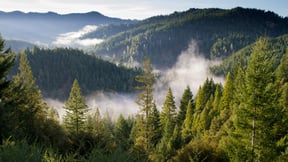
Forest ecosystems are an important mitigator of climate change, absorbing approximately 10% of U.S. annual emissions. But globally, deforestation is responsible for 10% of annual emissions. By protecting existing forests and promoting afforestation — planting more trees — there is great potential to further mitigate climate change, all while preserving habitat, reducing water and air pollution, maintaining access to nontimber forest resources, and supporting overall well-being. Limiting deforestation and promoting afforestation is one of the most cost-effective responses to climate change.

Nature-Based Climate Solutions: Blue Carbon Fact Sheet
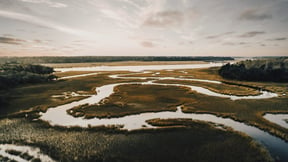
Blue carbon is the carbon naturally captured by the ocean and coastal ecosystems, such as seagrass beds, mangroves, salt marshes, and kelp forests. Blue carbon ecosystems can sequester and store more carbon per unit area than terrestrial forests and are critically important to climate change mitigation. We are losing blue carbon ecosystems to climate change and environmental degradation caused by human activities. As we lose these ecosystems, stored carbon is released back into the atmosphere, effectively creating an additional source of greenhouse gas emissions. In order to ensure that coastal ecosystems can continue to capture and store carbon, immediate conservation and restoration efforts are needed. At the state level, legislators can enact policies to advance conservation and restoration efforts.
Nature-Based Climate Solutions: Soil Fact Sheet
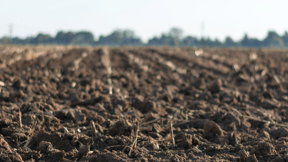
Agriculture has the potential to both mitigate and contribute to climate change. Agriculture contributes 10% of U.S. emissions, particularly from nitrous oxide. At the same time, good land use practices currently absorb 12% of our emissions. By improving agricultural practices, we can reduce existing emissions and enhance our soil’s ability to sequester carbon. Healthy soils practices can reduce emissions from poor soil management. States are increasingly finding ways to support farmers as they improve soil health.


Climate Adaptation Policy Options
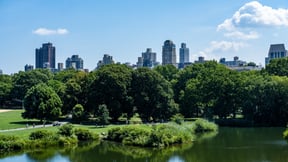
Climate adaptation and resiliency measures are integral in ensuring communities can adjust to the current and projected impacts of climate change. About 87% of Americans report experiencing some kind of extreme weather events including heat waves, floods, droughts, hurricanes, or wildfires. The impacts of these events are tied to high home insurance costs, expensive recoveries, and even displacement. Climate adaptability measures include improving and retrofitting existing infrastructure, creating more green infrastructure, and improving extreme weather strategies.

Outdoor Policy as Nature-Based Solutions
Nature-based solutions (NbS), sometimes called engineering with nature, build resilience by learning from and designing with natural landscapes and ecosystems. Nature-based solutions often cost less than traditional infrastructure and offer improved disaster resilience, green jobs, increased property values, economic growth, greenspace equity, and improved public health. Environmentally-committed outdoor policy promotes and builds on nature-based solutions.
Online Resources
The State Healthy Soil Policy Map is a useful crowdsourced depository of policies.
This report explores how state and local policies have protected six key habitats, including coastal wetlands, seagrass meadows, and kelp forests.
This interactive tool showcases current reforestation opportunities by state or country as well as how much carbon a revived forest could store.
Explore ways tree plantings and preservation of water bodies can reduce urban heat and sequester excess carbon.

Nature-Based Climate Solutions and Environmental Justice
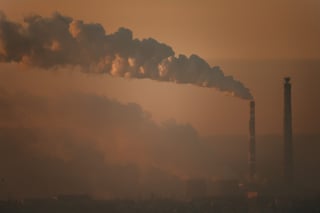
Investments in nature-based climate solutions and “green infrastructure” can enhance climate action while simultaneously improving overall environmental health, especially if policies account for environmental justice communities in the process.
Avoiding “Green Gentrification”
In many cities, investment in new green infrastructure — such as urban reforestation projects — has led to increased property prices that effectively displace lower-income communities in the immediate area(s). Cities and other jurisdictions can avoid green gentrification by dedicating funds to anti-displacement research and direct investments into areas vulnerable to displacement. (bloomberg.com)
Equitable Access to Nature-Based Solutions
To limit negative impacts on underserved populations, nature-based climate solutions and green infrastructure policy can also incorporate financing schemes that ensure permanent affordable housing for different income ranges in the vicinity of nature-based climate-mitigation infrastructure. (pnas.org)
Health Co-Benefits for Overburdened Communities
Nature-based climate solutions can also deliver health co-benefits, including improved air and water quality, reduced disease risk, and improved mental well-being. When intentionally sited in communities that have long faced disproportionate pollution burdens, these investments can simultaneously advance climate resilience while addressing longstanding public health disparities. (who.int)
News & Events

2026 Energy Affordability Leaders Summit
Join NEC in Philadelphia, Pennsylvania, from December 6-9 for a convening of energy affordability leaders.
2026 MRLC Forum Recap
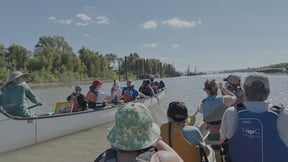
State legislators from across seven states convened in Jackson, Mississippi, for the 2026 Mississippi River Legislative Caucus (MRLC) Forum, where they explored how to support one of the most economically and socially consequential waterways.

Legislators from 43 States and Territories Oppose USDA’s Effort to Rescind the “Roadless Rule”
A bipartisan group of 232 state legislators from 43 states and territories submitted a formal comment letter to the U.S. Department of Agriculture (USDA) opposing the proposed rescission of the Roadless Area Conservation Rule (the “Roadless Rule”).
Subscribe to the National Environmental Caucus Newsletter
Stay up to date on upcoming events, opportunities to expand your network, and the latest environmental policy trends from across the U.S.