

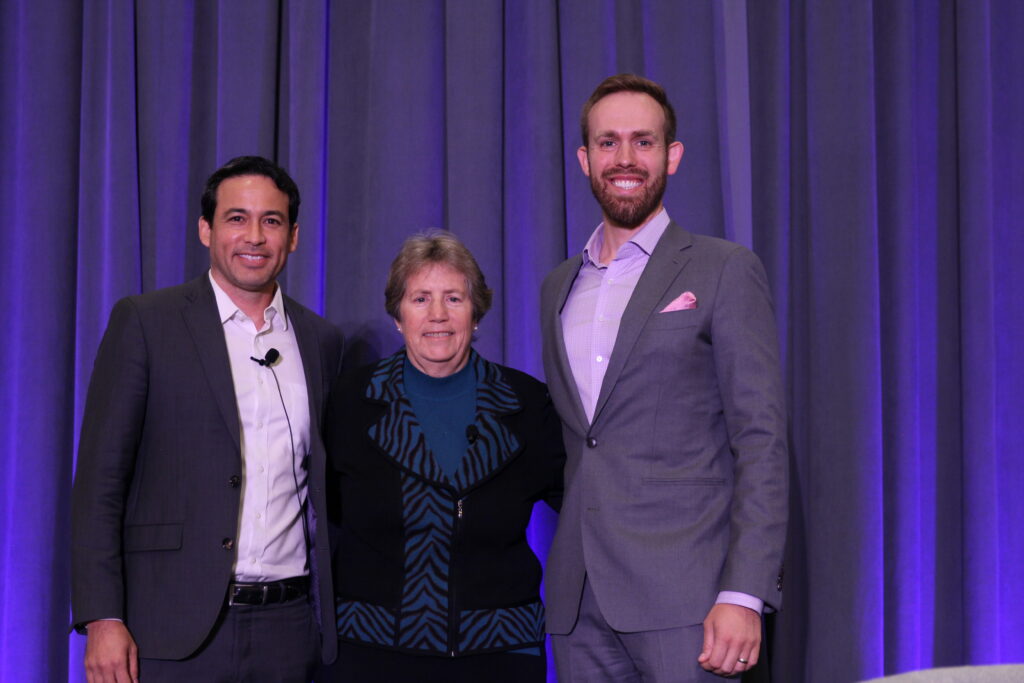
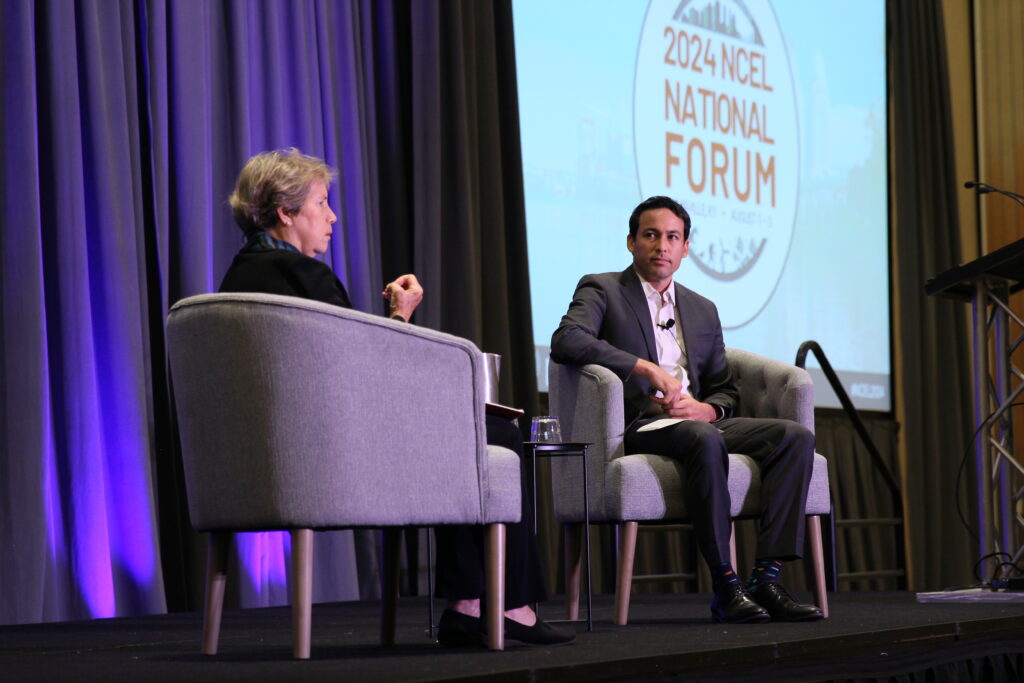
At the National Caucus of Environmental Legislator’s National Forum in Louisville, Kentucky, NEC and the University of Hawaiʻi (UH) announced a new partnership and memorandum of agreement to provide state legislators with environmental research expertise.
Science-based decision-making is more important than ever. This partnership will expand NEC’s access to vital research so that state legislators can develop evidence-based best practices and new policy solutions.
“Our pre-eminent capabilities in environment protection and conservation research have been built organically over many decades and are now widely recognized,” said UH President David Lassner. “This new agreement will enable us to share what we have learned with others around the country, as we do throughout Hawaiʻi and the Pacific.
“Equipping policymakers around the country with real science and data on our biggest issues will empower state leaders to deliver more effective and successful results for communities around the country,” said NEC President and Hawaiʻi State Senator Chris Lee. “At a time when courts have begun to restrict the scope of science in decision-making by the federal government, it’s more important than ever that states take the lead.”
This agreement comes at a crucial moment for states as actions by the federal government continued to be weakened. The action of states has never been more important than it is now. Yet, state legislators are understaffed, underresourced, and often underpaid.
“We are unlocking an incredible new opportunity for innovative policy solutions by connecting legislators with the research and expertise of the University of Hawaiʻi,” said NEC Executive Director Dylan McDowell. “This partnership is an important part of NEC’s efforts to connect our network of 1,300 lawmakers with UH experts across the globe on some of the most pressing environmental challenges.”
The University of Hawai‘i at Mānoa, which serves as the flagship of the ten-campus UH System, is classified as a Research 1 institution and one of a handful of land-, sea-, space-, and sun- grant universities. Researchers at UH have world-class expertise in a wide area of environmental-related fields, such as biological control, biocultural restoration, agroforestry, natural resource management, invasive species management, oceanography, clean energy, hydrology, and indigenous knowledge.
The agreement was signed by UH President David Lassner, UH Vice President for Research and Innovation Vassilis L. Syrmos, Hawai‘i State Senator Chris Lee, and NEC Executive Director Dylan McDowell.
“Natural resource management and conservation are no longer just catch phrases as Hawai‘i and the world are facing an onslaught of environmental challenges that are threatening our well-being,” said UH Vice President for Research and Innovation Vassilis L. Syrmos. “I’m pleased that NEC has partnered with UH research to assist them with various initiatives to help preserve and maintain our natural environment.”
###
About UH Research
Research conducted by the University of Hawai‘i (UH) impacts the quality of life in the islands and around the world. As the state’s major research university, and because of Hawai‘i’s tremendous geographic diversity, UH plays a prominent role in the state’s economic growth and development through its diverse and world-renowned research programs in astronomy, earth and ocean sciences, medicine, and tropical agriculture. http://www.hawaii.edu/research/
About NEC
Created by and for state legislators, the National Caucus of Environmental Legislators is a 501(c)(3) nonprofit that organizes over 1,300 environmentally-committed state legislators from all 50 states and both parties. NEC provides venues and opportunities for lawmakers to share ideas and collaborate on environmental issues.
Support the Network
Your generosity helps create opportunities for state legislators to meet, collaborate, and improve lives in their states.


Subscribe to the National Environmental Caucus Newsletter
Stay up to date on upcoming events, opportunities to expand your network, and the latest environmental policy trends from across the U.S.