
The Mississippi River is a vital source of ecological, economic, and cultural wellbeing for the communities and wildlife that reside in its watershed. The River supports more than 780 species of fish and wildlife, supplies 20 million people with drinking water, and supports an outdoor recreation economy that generates almost $500 billion in annual revenue.
Despite these many benefits, the health of the river is declining. Increasing rates of climate change and human-caused disruptions of the natural ecosystem have led to intensified flooding events and high levels of nutrient pollution, all of which adversely affect the region’s farmers, ecosystems, and economy.
State legislators throughout the Mississippi River corridor are taking action to improve the health of the Mississippi River and the resilience of the region’s communities. Check out some of the ways state legislators are working to maintain the Mississippi River as a source of prosperity, joy, and biodiversity.
State Representative Patty Acomb – Minnesota
1. What is your favorite way to enjoy the Mississippi River?
The Mighty Mississippi begins in Minnesota. For many years I lived near the headwaters in Itasca State Park and loved taking my children to play in Lake Itasca (the source of the Mississippi) and on the iconic rocks that are arranged to form the start. We also spent many summers canoeing the upper reaches of the river.
2. Can you tell us about a policy you’re proud of that addresses flood resiliency, nutrient pollution, sustainable agriculture, or soil health?
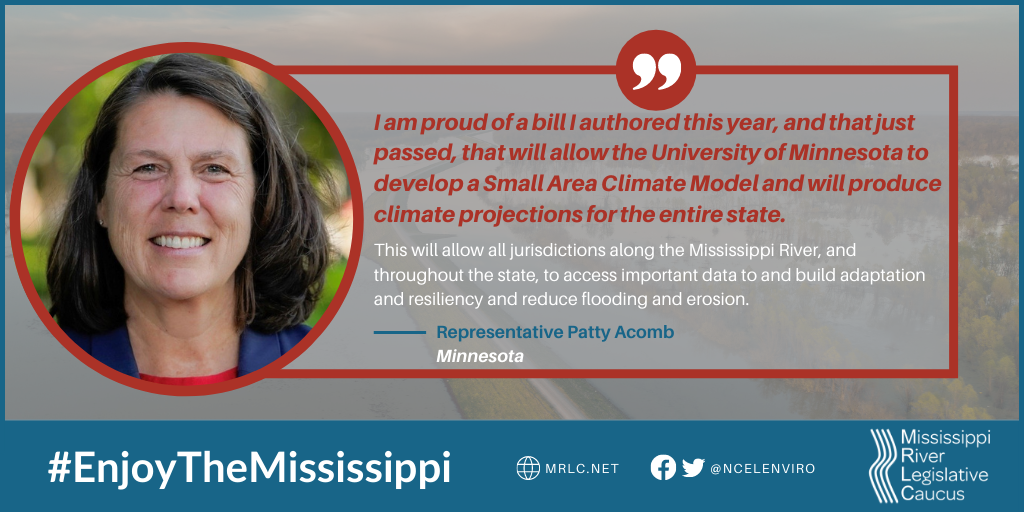
I am proud of a bill I authored this year, and that just passed, that will allow the University of Minnesota to develop a Small Area Climate Model and will produce climate projections for the entire state. This will allow all jurisdictions along the Mississippi River, and throughout the state, to access important data to and build adaptation and resiliency and reduce flooding and erosion.
State Representative Charles Isenhart – Iowa
1. What is your favorite way to enjoy the Mississippi River?
Hiking and photographing vistas, backwaters, tributaries and wildlife along the banks of the Mississippi River.
2. Can you tell us about a policy you’re proud of that addresses flood resiliency, nutrient pollution, sustainable agriculture, or soil health?
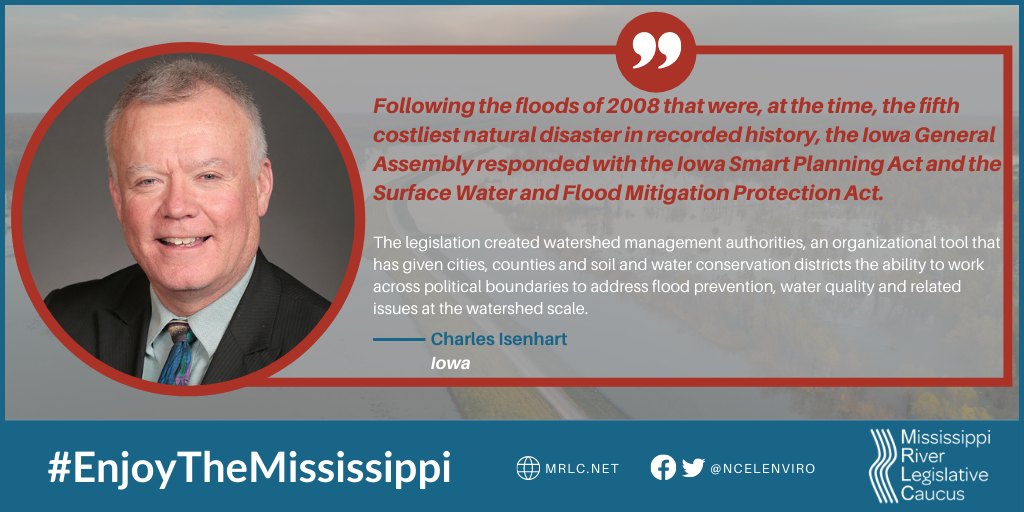
In 2009 and 2010, following the floods of 2008 that were, at the time, the fifth costliest natural disaster in recorded history, as part of a mission to “Rebuild Iowa,” the Iowa General Assembly responded with the Iowa Smart Planning Act and the Surface Water and Flood Mitigation Protection Act. The bills put smart planning principles into the Iowa Code for the first time. The legislation created watershed management authorities, an organizational tool that has given cities, counties and soil and water conservation districts the ability to work across political boundaries to address flood prevention, water quality and related issues at the watershed scale.
Support the Network
Your generosity helps create opportunities for state legislators to meet, collaborate, and improve lives in their states.


Subscribe to the National Environmental Caucus Newsletter
Stay up to date on upcoming events, opportunities to expand your network, and the latest environmental policy trends from across the U.S.