
Overview
On May 16, Iowa enacted H.F. 2364 advocating for disability accessibility in state parks. The bill directs the Natural Resources Commission to survey and develop recommendations to improve state park accessibility for disabled people. In addition to H.F. 2364, legislators successfully sought $1.3 million in appropriations for parks accessibility improvements.
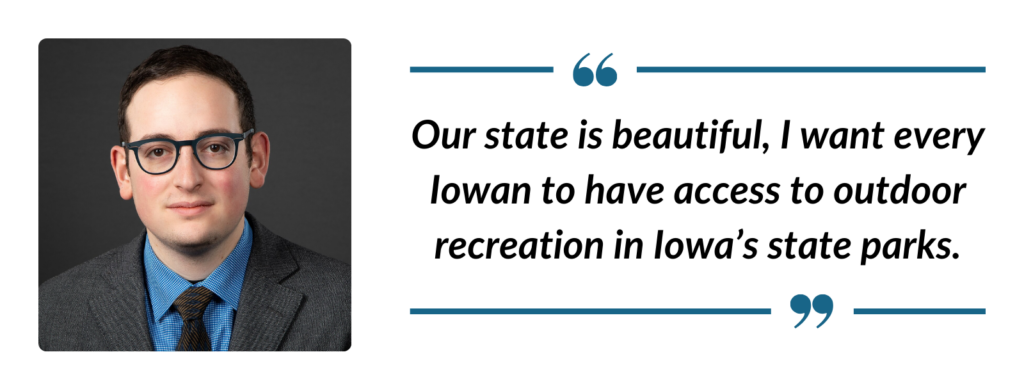
H.F. 2364 was taken up by the Natural Resources Committee from State Representative Adam Zabner’s original bill, H.F. 2009. “Our state is beautiful, I want every Iowan to have access to outdoor recreation in Iowa’s state parks,” Zabner reported, “The policy in this bill, and the $1.3 million appropriated in our state’s budget for accessibility upgrades in parks, will help Iowans with disabilities learn about existing accessible opportunities and create new ones.”
H.F. 2364 and its advocates engaged broad support throughout the legislative process. Zabner shared, “I’m proud of the bipartisan support this bill earned. In particular, Representatives Jeneary and Turek were crucial to making this happen. I’m thankful to all of the advocates and legislators who worked to make this happen.”
Other State Action
This session, Massachusetts is exploring a similar survey to assess current accessibility, community needs, and make recommendations for improving physical accessibility of trails via commission. Virginia established a two-year all-terrain power wheelchair pilot program to develop guidelines and processes for providing all-terrain power wheelchairs in state parks.
In 2023, states collectively invested $34.5 million in disability access improvements, including Iowa building modified kayak launch areas, and Colorado established a task force to study the rights and needs of disabled people in accessing state-funded outdoor recreation.
- Why it matters: According to the CDC, at least 1 in 4 adults live with some form of disability. However, the Americans with Disabilities Act and related federal acts ensuring disabled people can access public spaces only offer limited requirements and protections for public outdoor recreation.
- Disability Access is Often Access for All: Identifying and following best practices for disabled people not only makes access to the outdoors more equal, it can improve experiences and access for everyone. For example, trails designed to include people using mobility devices are not only more weather and climate resistant, they offer opportunities for seniors, young children, and families with strollers.
Additional Resources
- Learn more about universal trails as a climate solution in NEC’s Outdoors as a Climate Solution Briefing Book.
- Explore NEC’s fact sheet on Outdoor Wellness: Mental Health Policy Options.
- Learn more about Outdoor Engagement through NEC’s website.
Support the Network
Your generosity helps create opportunities for state legislators to meet, collaborate, and improve lives in their states.


Subscribe to the National Environmental Caucus Newsletter
Stay up to date on upcoming events, opportunities to expand your network, and the latest environmental policy trends from across the U.S.