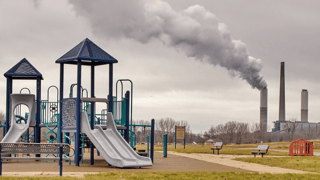
Did you know that race is the best indicator of whether a US Citizen lives near a hazardous waste site? On average, communities of color have 48 hazardous waste sites per square mile, whereas white communities have two.
And did you know that after a natural disaster, housing recovery efforts have been found to favor middle to upper-class homeowners? After Hurricane Katrina, many homeowners received property damage grants that exceeded the cost of repairs. Because these costs were based on property values, many African American families were left with a deficit well over $30,000, at an average of $8,000 more than white homeowners.
Environmental justice is closely related to all aspects of environmental policy
Stat after stat reveals that environmental hazards disproportionately burden communities of color and economically disadvantaged communities, while solutions tend to heavily benefit more affluent, white communities. This concept, referred to as environmental justice, is closely intertwined with all aspects of the environment.
This is why NEC has dedicated a space on our website specifically for environmental justice resources: www.ncel.net/environmental-justice. Many groups have been working on these issues for decades, so we’ve also included a list of EJ organizations and advocacy groups that are experts in the field and are ultimately the most valuable resources for legislators.
States are working to integrate equitable solutions into legislation
For now, our webpage serves to identify injustices in each of our program areas – environmental health, conservation, and climate and energy – but also ways that state legislators have been integrating equitable solutions into their legislation to address these injustices. For example:
- Maine LD 1263: Provides financial assistance for well-water treatment for properties with contaminated wells, as well as low-income families with private wells.
- Washington HB 1677: Creates an outdoor education and recreation grant program to increase kids’ access to outdoor ed & rec and improve academic success. The program prioritizes schools and students of greatest need, i.e., children that qualify for free and reduced-price lunch.
- California SB 535: Requires that 25% of the revenue generated from California’s cap-and-trade system (AB 32) goes towards projects that benefit disadvantaged communities overall, at least 10% of which must go directly to projects within disadvantaged communities.
As these three bills show, funding is ultimately one of the most direct ways to address inequities while benefiting the environment and public health. However, states like Massachusetts and Washington are taking this one step further by introducing comprehensive environmental justice legislation.
Massachusetts and Washington are leading the way with comprehensive legislation
Massachusetts’ Environmental Justice Act and Washington’s Establishing a Healthy Environment for All Act are both vital bills that work to create an advisory council dedicated to identifying the communities most affected by pollution or an environmental hazard as well as the best ways to help them.
If these pieces of landmark legislation pass, we hope other states can look to these models and work to protect disadvantaged communities from environmental hazards through strong legislation.
Support the Network
Your generosity helps create opportunities for state legislators to meet, collaborate, and improve lives in their states.


Subscribe to the National Environmental Caucus Newsletter
Stay up to date on upcoming events, opportunities to expand your network, and the latest environmental policy trends from across the U.S.