

On Tuesday, April 4, U.S. Department of Transportation Secretary Pete Buttigieg announced the release of a highly-anticipated Notice Of Funding Opportunity for the Wildlife Crossings Pilot Program (WCPP), the first-ever program dedicated to protecting public safety and enhancing wildlife habitat connectivity by reducing wildlife-vehicle collisions.
What is the Wildlife Crossings Pilot Program?
The WCPP offers $350 million over five years, a monumental investment that will help protect wildlife populations while greatly reducing the deaths, injuries, and financial costs associated with wildlife-vehicle collisions. Entities that are eligible to apply for the funding include: state departments of transportation, metropolitan planning organizations, local governments, regional transportation authorities, special purpose districts, public authorities with a transportation function, Tribes, and federal land management agencies.
This year’s (FY23) package makes $111 million available, with a 20% non-federal match requirement. Applications are due August 1, 2023.
Project Eligibility
Both construction and non-construction activities are eligible under the new WCPP.
- Eligible construction activities include design costs, environmental permitting, road infrastructure adaptation and replacement, habitat preservation or restoration necessary to make a crossing project more effective, and the costs of building wildlife underpasses and overpasses.
- Eligible non-construction activities include research, planning, outreach, and education.
Grant Resources
- Wildlife Crossings Program Application Checklist
- DOT Navigator – Grant Application Resources
- FHWA Bipartisan Infrastructure Law Website
- USDOT Bipartisan Infrastructure Law Website
Recent State Action
So far in 2023, 15 states have introduced 21 pieces of legislation related to wildlife corridors and crossings.
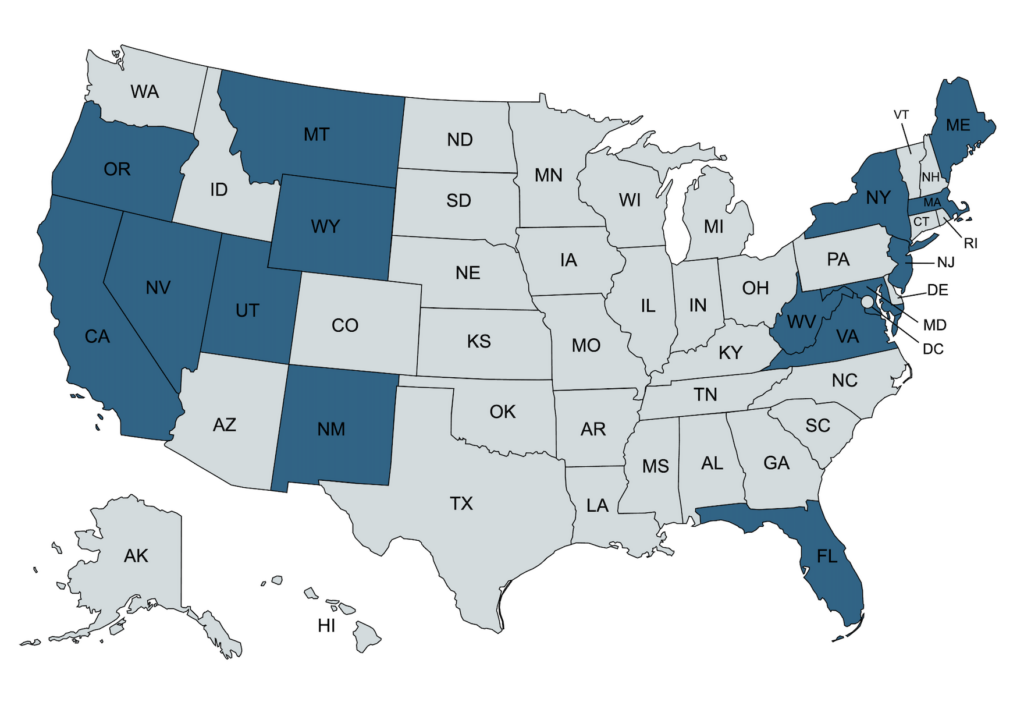
Many of these bills appropriate money for crossing projects in order to meet the non-federal matching requirements of the Wildlife Crossings Pilot Program, as well as the numerous other wildlife infrastructure funding opportunities within the Infrastructure Investment and Jobs Act.
- Wyoming, Utah, and New Mexico have all passed funding bills to support the construction of wildlife crossings. Similar bills are under consideration in Colorado, California, Montana, Nevada, and Oregon.
Beyond funding the construction of wildlife crossings, states are taking other innovative steps to enhance wildlife habitat connectivity.
- A bill in Montana would require the use of wildlife-friendly fencing on state lands, while a bill in Florida would help protect lands that complete critical linkages within the Florida Wildlife Corridor.
- Another bill in Maryland would designate and fund shoreline restoration in places where habitat connectivity between the land and water is degraded.
- Oregon also introduced a bill that would require the consideration of wildlife corridors during renewable energy project development.
Support the Network
Your generosity helps create opportunities for state legislators to meet, collaborate, and improve lives in their states.


Subscribe to the National Environmental Caucus Newsletter
Stay up to date on upcoming events, opportunities to expand your network, and the latest environmental policy trends from across the U.S.